Ensure custom sock quality! Inspect key manufacturing details for superior results. Get a custom sample today! Quality Control in Custom S...
Ensure custom sock quality! Inspect key manufacturing details for superior results. Get a custom sample today!
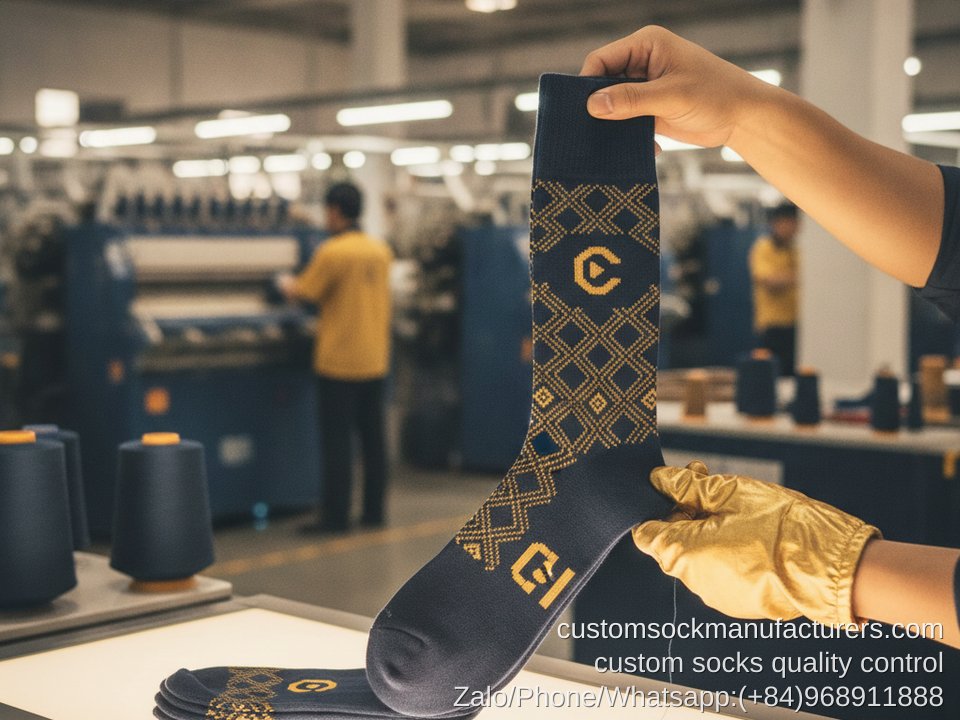
Quality Control in Custom Socks Manufacturing: What Buyers Should Inspect
When sourcing custom socks, particularly for your brand or business, ensuring consistent quality is paramount. Buyers need to understand the critical aspects of custom socks quality control to guarantee that the final product meets expectations and upholds brand integrity. This involves more than just a visual check; it requires a systematic approach to inspection at various stages of production. At Custom Sock Manufacturers, operated by Gold Garment in Ho Chi Minh City, Vietnam, we understand the importance of rigorous quality checks, from yarn selection to final packaging.
Our commitment to excellence in manufacturing extends to every pair of socks we produce. We believe that a well-defined custom socks quality control process safeguards your investment and builds lasting customer trust. This guide will walk you through the essential elements buyers should inspect to ensure they receive the highest quality custom socks, reflecting the meticulous standards found in comprehensive garment quality control Vietnam practices.
Understanding the Importance of a Robust Quality Control System
A strong quality control system is the backbone of any successful manufacturing operation, especially in the competitive apparel and hosiery markets. For custom socks, this system ensures that every batch adheres to agreed-upon specifications, from material composition and construction to design accuracy and durability. Neglecting quality control can lead to costly returns, damaged brand reputation, and dissatisfied customers.
For buyers, understanding the manufacturer's quality control protocols is as crucial as understanding the production process itself. This includes how defects are identified, categorized, and rectified. A transparent approach to custom socks quality control fosters confidence and a strong partnership between the buyer and the manufacturer.
Key Stages of Quality Inspection for Custom Socks
Effective custom socks quality control is not a single event but a series of checks implemented throughout the manufacturing lifecycle. Each stage presents opportunities to identify and address potential issues before they escalate.
1. Raw Material Inspection
The foundation of high-quality socks lies in the quality of the raw materials. This includes yarns, dyes, and any embellishments. Buyers should inquire about the sourcing of these materials and the manufacturer's inspection process for them.
- Yarn Quality: Inspect for consistent thickness, color uniformity, and absence of knots or impurities. Different fibers, such as those detailed in our custom socks Materials Guide, have unique quality indicators.
- Dyeing and Colorfastness: Ensure dyes are non-toxic and meet colorfastness standards, especially for vibrant or custom-designed colors. Samples should be tested for bleeding or fading under normal washing conditions.
- Accessory Quality: If your design includes special features like elastic bands, reinforced heels, or specific stitching types, these components must also be inspected for durability and correct specifications.
2. In-Process Production Checks
During the knitting and assembly phases, regular checks are vital to catch errors early. This is where the actual creation of the sock takes place, and deviations can occur.
- Knitting Accuracy: Verify that the knitting machines are calibrated correctly and producing the intended stitch density and pattern. Any inconsistencies in the knit can affect the sock's fit, comfort, and appearance.
- Seam Integrity: The toe seam is a critical point. It should be smooth, flat, and securely stitched. A poorly executed seam can cause discomfort and irritation.
- Sizing and Dimension Consistency: Socks must meet the specified size ranges. In-process checks ensure that the knitting length and width are consistent with the target dimensions. This is especially important for specialized sock types, as outlined in our Sock Types Guide.
3. Pre-Shipment Inspection (PSI)
This is often the most comprehensive inspection, conducted before the goods are dispatched from the factory. It's the final opportunity to catch any issues before the socks reach the buyer.
- Visual Appearance: Check for any snags, holes, stains, loose threads, or uneven knitting. The overall aesthetic should match the approved design and sample.
- Dimensional Accuracy: Confirm that the finished socks conform to the specified length, width, and cuff height.
- Functionality and Fit: Socks should exhibit the intended stretch and recovery. Try them on (if samples permit) to assess comfort and fit.
- Labeling and Packaging: Ensure all tags, labels (including care instructions), and packaging are correct, accurately placed, and free from defects.
Understanding AQL Inspection for Socks
When discussing custom socks quality control, the concept of the AQL inspection socks (Acceptable Quality Limit) is fundamental. AQL is a standard used in quality control that determines the acceptable number of defects in a given sample size. It's a statistical method to ensure a reasonable level of quality without inspecting every single unit, which is impractical for large production runs.
AQL levels are usually agreed upon between the buyer and the manufacturer. For example, an AQL of 2.5 means that for a batch to be accepted, no more than 2.5% of the inspected items should have critical defects, and a slightly higher percentage for major or minor defects, depending on the agreed-upon standards. This systematic approach helps maintain consistent quality across large volumes, a key consideration for brands working with a reliable OEM vs Private Label custom socks partner.
Common Custom Socks Defects and Standards
Familiarizing yourself with typical defects helps in identifying issues during inspection. Understanding custom socks defect standards is crucial for clear communication with your manufacturer.
- Holes and Tears: Obvious defects that render a sock unsellable.
- Stains and Discoloration: Can occur during dyeing or handling.
- Loose Threads: Indicate poor finishing and can unravel.
- Uneven Knitting: Affects appearance, comfort, and durability.
- Incorrect Sizing: Socks that are too large or too small.
- Poorly Executed Seams: Especially the toe seam, which can cause discomfort.
- Color Mismatch: When the actual color deviates significantly from the approved sample.
- Labeling Errors: Incorrect placement, spelling mistakes, or wrong information on tags.
Establishing clear custom socks defect standards with your manufacturer, ideally with visual aids and examples, is vital for consistent results. This aligns with the comprehensive approach to hosiery quality check that experienced manufacturers implement.
The Role of the Manufacturer in Quality Assurance
While buyers play a crucial role in inspection, the primary responsibility for implementing robust custom socks quality control lies with the manufacturer. A reputable factory will have its own internal quality assurance team and processes in place.
At Custom Sock Manufacturers, operated by Gold Garment, our 10+ years of experience have allowed us to refine our internal quality assurance protocols. We employ skilled technicians who conduct multi-point inspections throughout the production process. Our facility in Ho Chi Minh City is equipped to handle large-scale production, ensuring that even with an MOQ of 100 pcs, the quality remains consistently high. This dedication to quality is a hallmark of our operation, as demonstrated by our commitment to comprehensive garment quality control Vietnam standards.
We understand that consistent quality is key to building brand loyalty. Our factory-direct pricing and worldwide shipping options make us an ideal partner for businesses seeking reliable custom sock production. Learn more about our capabilities and how we ensure quality in every order by exploring our services, such as those detailed in a real example from custom socks factory Gold Garment.
Tips for Buyers to Enhance Custom Socks Quality Control
To maximize your chances of receiving excellent quality custom socks, consider these proactive steps:
- Provide Clear Specifications: Submit detailed design files, color codes (Pantone), material requirements, sizing charts, and any specific construction details.
- Request and Approve Samples: Always request pre-production samples (PPS) and, if possible, counter-samples to approve before mass production begins. This is your chance to catch design or quality issues early.
- Define AQL and Inspection Criteria: Clearly communicate your expectations for AQL levels and the types of defects that are critical, major, or minor.
- Consider Third-Party Inspections: For large orders or if you are new to sourcing, consider hiring an independent third-party inspection agency to conduct a pre-shipment inspection.
- Build a Relationship: Foster open communication with your manufacturer. A strong, collaborative relationship often leads to better quality outcomes. Our streamlined process, from design to delivery, supports brands looking for partners who also offer services like a Vietnam sweatshirt manufacturer.
- Understand the Manufacturing Process: Familiarize yourself with how custom socks Are Made: The Manufacturing Process Step-by-Step. This knowledge empowers you to ask more informed questions about quality checks.
Frequently Asked Questions
Q: What is the most common quality issue in custom socks?
A: The most common quality issues often revolve around knitting inconsistencies, such as uneven stitches or dropped loops, and problems with the toe seam, which can cause discomfort. Color matching and accurate sizing are also frequent concerns.
Q: How can I ensure my custom sock designs are accurately reproduced?
A: Provide extremely clear design specifications, including vector artwork, Pantone color codes, and detailed instructions for any special knit patterns or features. Approving pre-production samples is crucial for verifying that your design intent has been captured accurately before bulk production commences.
Q: What is a reasonable MOQ for quality custom socks?
A: A reasonable MOQ can vary, but a starting point like 100 pcs per style, as offered by Custom Sock Manufacturers (Gold Garment), is quite accessible for many brands. Higher MOQs might sometimes allow for finer-tuned quality control processes or material sourcing, but a 100-piece minimum is a good indicator of a manufacturer's flexibility and commitment to accommodating smaller brands while maintaining quality standards, as detailed in our Minimum Order Quantity for custom socks: A Buyer's Complete Guide.
By thoroughly inspecting these key areas and working closely with a reputable manufacturer, you can significantly enhance the quality of your custom socks. Partner with us for consistent quality and seamless production.
📩 Request a Free Quote — Response Within 5 Minutes
🌎 Website: customsockmanufacturers.com
Factory-direct pricing · MOQ from 100 pcs/style · Sample development · Worldwide shipping


